How Dirty Filters Affect Hydraulic Valve Performance
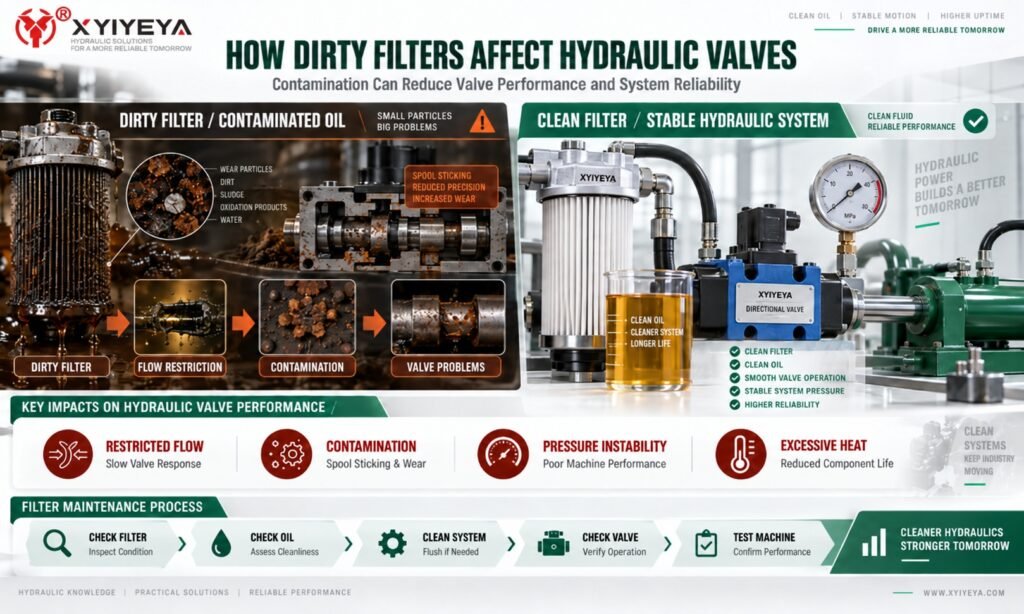
Dirty hydraulic filter elements directly affect the working performance of hydraulic valves by restricting oil flow and allowing contaminants to enter sensitive hydraulic components.
Hydraulic valves require clean hydraulic oil and stable flow to accurately control oil direction, pressure, and actuator speed. When the filter element is clogged or filtration efficiency decreases, the hydraulic system may experience problems such as pressure loss, unstable operation, system overheating, spool sticking, and premature wear of hydraulic components.
A typical contamination process can be expressed as:
Hydraulic oil contamination → filter element gradually clogs → flow and pressure change → hydraulic valve performance becomes unstable
If contaminants bypass the filter element and enter the system:
Contaminated oil → enters internal valve clearances → spool wear or sticking → internal leakage and abnormal control
Therefore, when troubleshooting hydraulic valve faults, the condition of the filter element should always be one of the important inspection items.
Why Hydraulic Oil Cleanliness Is Very Important
Hydraulic valves usually have small fitting clearances inside.
These precision components may include:
Spool
Valve seat
Poppet valve
Pilot stage
Pressure control components
Internal components of proportional valves
When particulate contaminants enter these areas, they may hinder the normal movement of components or damage precision fitting surfaces.
Common sources of contaminants include:
Metal wear particles
Dust and impurities
Seal debris
Rust particles
Hydraulic oil oxidation deposits
Contaminants introduced during maintenance
Over time, these contaminants may reduce hydraulic valve response speed and increase internal leakage.
How Dirty Filter Elements Restrict Hydraulic Flow
As hydraulic filter elements continuously intercept contaminants, the impurities accumulated inside the filter element gradually increase.
If the filter element is not replaced in time for a long period, its flow resistance will become increasingly greater.
This process can be expressed as:
Clean filter element → normal oil flow → contaminants gradually accumulate → pressure differential increases → oil flow is restricted
Restricted flow affects the amount of oil available to hydraulic valves and actuators.
Common symptoms include:
Hydraulic cylinder movement speed becomes slower
Hydraulic motor speed decreases
Hydraulic valve response delay
Insufficient system flow
Unstable equipment cycle time
For equipment requiring fast, repetitive actions, even a moderate degree of flow restriction may affect overall production efficiency.
Dirty Filter Elements May Cause Abnormal Pressure
A clogged filter element creates an unnecessary pressure differential across the filter element.
Depending on the installation position of the filter element, it may affect hydraulic pump suction, pressure oil circuit, or return oil flow.
Possible system phenomena include:
Pressure fluctuation
Reduced available pressure
Abnormal back pressure
Slow pressure build-up
Abnormal drop in system pressure
However, low system pressure does not necessarily mean the pressure valve is damaged.
Before replacing hydraulic valves, the complete hydraulic circuit should be checked.
A practical troubleshooting sequence is:
Check filter element → check oil level → check hydraulic pump → check valve settings → check system internal leakage
Contamination May Cause Directional Valve Spool Sticking
Directional control valves rely on the free movement of the internal spool to switch oil circuits.
A typical action process is:
Electrical signal → solenoid action → spool movement → oil direction change → actuator action
If contaminant particles enter the fitting clearance between the spool and valve body, spool movement may be obstructed.
Common symptoms include:
Switching delay
Incomplete spool movement
Spool cannot return properly
Hydraulic cylinder cannot move
Intermittent actuator action
Solenoid is energized but hydraulic function is abnormal
In this case, simply replacing the coil usually cannot solve the problem, because the real cause of the fault may be contamination inside the hydraulic valve.
Proportional Valves Are More Sensitive to Contamination
Proportional hydraulic valves are not simple on/off controls; they require precise control of spool position.
Even a small change in spool position may affect:
Flow
Pressure
Actuator speed
Acceleration
Positioning performance
Therefore, contamination may cause:
Unstable output
Actuator jitter
Reduced repeatability
Slower response
Control error
Increased internal leakage
For equipment using the following proportional valve series:
4WRA, 4WRAE, 4WREE, 4WRZ, 4WRKE, 4WRTE
Hydraulic oil cleanliness and filtration systems are especially important.
If the contamination problem is not solved first and the relatively expensive proportional valve is directly replaced, the new valve may also soon develop similar faults.
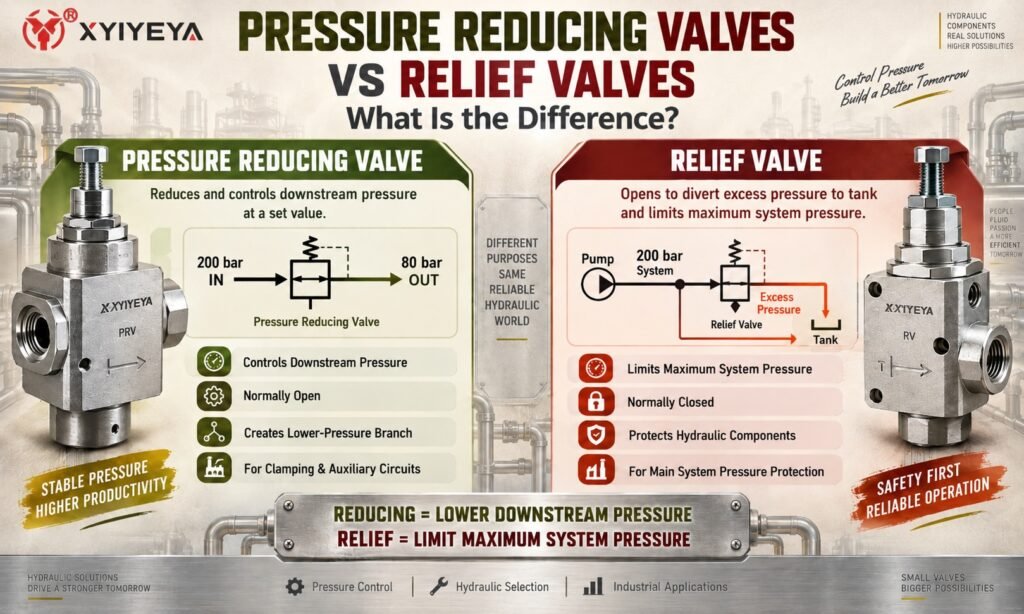
Dirty Filter Elements Also Affect Pressure Control Valves
Pressure control valves rely on internal small oil passages, springs, poppet valves, pilot components, or spools to regulate system pressure.
Contaminants may affect the normal operation of these components.
For example, a relief valve may experience:
Unstable pressure
Abnormal opening pressure
Slow response
Internal leakage
Valve cannot close completely
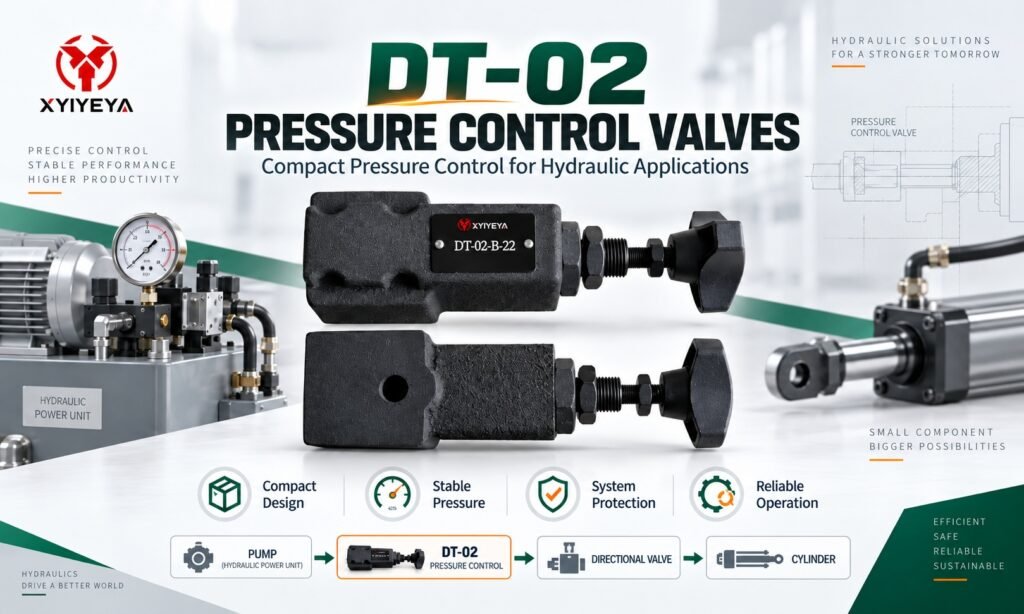
Pressure control valves such as:
DB, DBW, DBD, DBE, DBEM, DBETR
Although their internal structures differ, they all require clean hydraulic oil to maintain stable pressure control.
If system pressure suddenly becomes unstable, the pressure valve itself should not be the only thing checked.
The filter element condition and hydraulic oil cleanliness should also be checked at the same time.
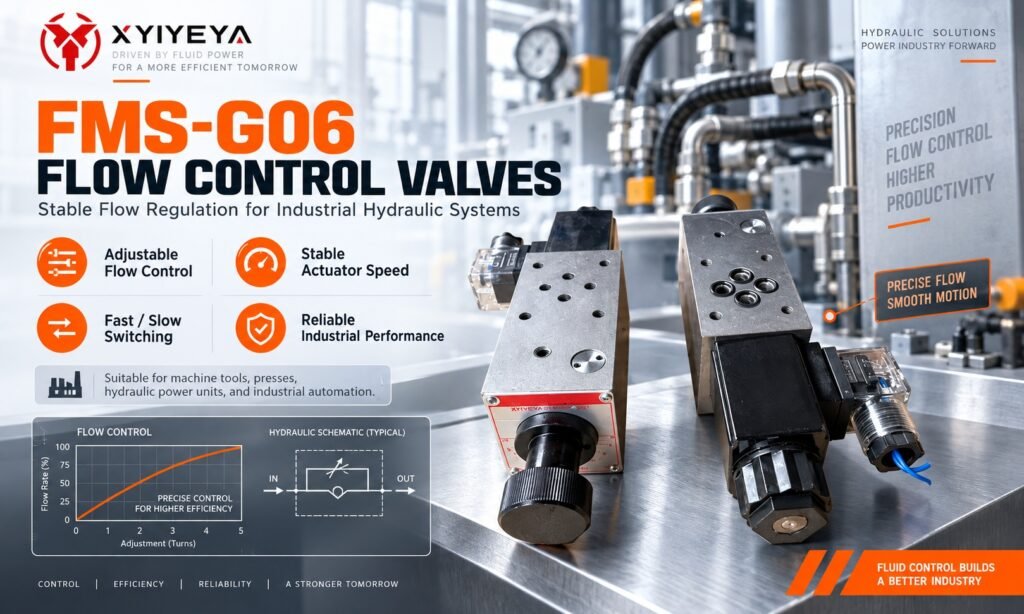
Flow Control Valves May Lose Speed Stability
Flow control valves control actuator speed by regulating oil flow.
If contaminants clog internal oil passages or affect the adjusting mechanism, actuator speed may become unstable.
Common symptoms include:
Hydraulic cylinder movement too slow
Speed changes during operation
Unstable fast/slow speed switching
Flow adjustment effect not obvious
Equipment cycle time changes
For example:
Z2FS, 2FRM, 2FRE and other flow control valves
All need to keep internal oil circuits clean to achieve stable speed regulation.
Therefore, even if the flow valve itself is not damaged, a dirty filter element may affect equipment speed performance.
Check Valves May Also Be Affected by Particulate Contamination
Check valves usually allow oil to flow in one direction while preventing reverse flow.
Their basic working method is:
Forward flow → valve opens
Reverse flow → valve closes
If contaminant particles become stuck near the valve seat, the valve may not close completely.
This may cause:
Reverse leakage
Pressure drop
Hydraulic cylinder drift
Poor load holding
Reduced system efficiency
The pilot oil circuit and internal moving parts of pilot-operated check valves may also be affected by contamination.
For load holding applications, special attention is needed, because leakage may not necessarily come from the check valve, but may also come from directional valves, hydraulic cylinder seals, or other components in the circuit.
Filter Bypass May Allow Contaminated Oil to Enter Hydraulic Valves
Some hydraulic filters have a bypass function.
When the pressure differential across a clogged filter element becomes too high, the bypass valve may open, allowing oil to continue flowing.
This can prevent severe flow shortage in some systems, but it may also mean that insufficiently filtered oil continues to circulate in the system.
The process may be:
Filter element clogged → pressure differential increases → bypass opens → contaminated oil continues to circulate
Downstream hydraulic valves may then come into contact with particulate contaminants that should have been intercepted by the filter element.
Therefore, the fact that the equipment can still operate does not mean the filter element is in normal condition.
Dirty Filter Elements May Increase System Heat
A clogged filter element increases oil flow resistance.
The additional pressure loss converts part of the hydraulic energy into heat.
At the same time, internal valve leakage and excessive throttling caused by contamination may further increase system heat.
Common warning signs include:
Increased oil temperature
Oil tank becomes noticeably hot
Reduced actuator speed
Reduced system efficiency
Faster seal aging
Hydraulic oil deteriorates faster
High temperature also reduces hydraulic oil viscosity, thereby increasing internal leakage and further causing more problems.
This may form a vicious cycle:
Filter element clogged → flow resistance increases → system heat → oil viscosity decreases → internal leakage increases → system efficiency decreases
Filter Problems Are Easily Mistaken for Hydraulic Valve Faults
A common mistake during maintenance is to replace hydraulic valves before checking the filtration system.
For example:
Slow hydraulic cylinder movement does not necessarily mean the directional valve is damaged.
Low system pressure does not necessarily mean the relief valve is faulty.
Unstable actuator speed does not necessarily mean the flow valve is damaged.
Proportional valve control jitter does not necessarily mean the proportional valve itself needs to be replaced.
The real cause may be:
Clogged filter element + hydraulic oil contamination + hydraulic pump wear + system internal leakage + incorrect valve adjustment
Therefore, hydraulic fault troubleshooting should be carried out from the perspective of the entire system.
Common Symptoms of Dirty Hydraulic Filter Elements
A dirty or clogged hydraulic filter element may correspond to the following phenomena:
System symptom Possible impact
Slow hydraulic cylinder movement Oil flow is restricted
Unstable pressure Pressure loss or contamination effects
Spool sticking Contaminant particles affect spool movement
System overheating Increased oil flow resistance
Increased hydraulic pump noise Possible suction obstruction or insufficient oil supply
Abnormal actuator speed Unstable system flow
Increased internal leakage Wear of internal valve surfaces
Shortened hydraulic valve life Wear caused by long-term contamination
Frequent hydraulic valve failures Possible persistent oil contamination problem
These phenomena may also be caused by other problems, so the filter element should be an important inspection item in the diagnosis of the entire hydraulic system.
What to Check Before Replacing Hydraulic Valves
When a hydraulic valve appears to be faulty, it is recommended to check the surrounding system before replacement.
Key items include:
Hydraulic filter element condition
Filter clogging indicator
Hydraulic oil cleanliness
Hydraulic oil level
Oil temperature
Hydraulic pump condition
System pressure
Valve mounting surface
Valve block cleanliness
Pipelines and hoses
Leakage of hydraulic cylinders or hydraulic motors
For electrically controlled hydraulic valves, also check:
Coil voltage + plug + wiring + control signal
For proportional valves, also confirm:
Control signal + amplifier + integrated electronics + feedback configuration
This can avoid incorrectly replacing hydraulic valves when the actual fault is elsewhere in the system.
Do Not Install New Valves Directly into a Contaminated System
If a new hydraulic valve is directly installed into a severely contaminated system, the service life of the replacement valve may be greatly shortened.
Before installation, it is recommended to:
Clean the valve mounting surface
Check hydraulic oil condition
Inspect or replace the filter element if necessary
Clean contaminated valve blocks and pipelines
Prevent dust from entering open oil ports
Flush according to system contamination conditions
After installation, continue to monitor:
System pressure
Hydraulic oil temperature
Valve response
Actuator action
External and internal leakage symptoms
A good installation process not only protects the new valve but also helps protect the entire hydraulic system.
Hydraulic Filter Element Maintenance Should Be Determined According to Actual Working Conditions
Hydraulic filter element replacement cannot rely only on fixed time intervals.
The working conditions of different equipment vary greatly.
For example, if a hydraulic system:
runs continuously 24 hours a day
and is in a dusty industrial environment, its hydraulic oil contamination rate may be much higher than that of equipment that operates occasionally in a clean environment.
When making a maintenance plan, consider:
Equipment operating time
Working environment
Hydraulic oil condition
Filter element condition indication
System temperature
Sensitivity of hydraulic components
Historical contamination problems
The filter element type and filtration accuracy should also be determined according to the requirements of the hydraulic system and component manufacturer.
After Hydraulic Valve Failure, Pay More Attention to Hydraulic Oil Cleanliness
When mechanical damage occurs to hydraulic components, wear particles may enter the hydraulic oil.
For example, when the following components wear:
Internal components of hydraulic pump
Spool
Valve body
Hydraulic cylinder working surface
Bearings
All may produce metal contaminants.
If only the damaged hydraulic valve is replaced without cleaning the entire hydraulic system, these particles may remain in the circuit.
A more reasonable maintenance process is:
Confirm fault → check hydraulic oil → check filter element → clean or flush if necessary → install new valve → test system
This can reduce the risk of repeated damage to hydraulic components.
How XYIYEYA Supports Hydraulic Valve Repair and Replacement
XYIYEYA provides hydraulic control products for industrial machinery, hydraulic power units, automation systems, and repair and replacement projects.
Related products include directional control valves, pressure valves, flow control valves, check valves, modular valves, proportional valves, cartridge valves, coils, valve blocks, and hydraulic accessories.
Common series include:
4WE6 / 4WE10 / DSG-02 / DSG-03, for directional control;
DB / DBW / DBD, for pressure control;
Z2FS / 2FRM / 2FRE, for flow regulation;
Z1S / Z2S / SV / SL, for check control and position holding;
and proportional control products such as 4WRA / 4WRAE / 4WREE / 4WRZ / 4WRKE.
When a hydraulic valve fails, customers can provide:
complete model, nameplate, hydraulic symbol, product photos, pressure, flow, voltage, and equipment fault symptoms
This information helps confirm the correct replacement model and determine whether the hydraulic system requires further inspection.
Conclusion
Dirty hydraulic filter elements can affect hydraulic valve performance in many ways:
Restricted flow → slower actuator action
Oil contamination → spool sticking and wear
Pressure loss → unstable system operation
Increased flow resistance → system heat
Particle wear → increased internal leakage
Reduced filtration effect → shortened hydraulic valve life
Therefore, when troubleshooting hydraulic valve faults, the valve itself should not be the only thing checked.
A complete inspection should include:
Filter element condition + hydraulic oil cleanliness + pressure + flow + temperature + hydraulic pump condition + hydraulic valve function
Keeping hydraulic oil clean and replacing filter elements in time when needed helps improve hydraulic valve reliability, reduce unexpected downtime, and extend the service life of the entire hydraulic system.